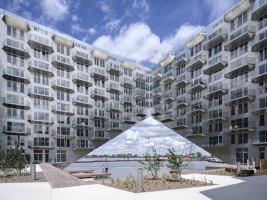
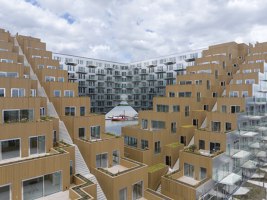
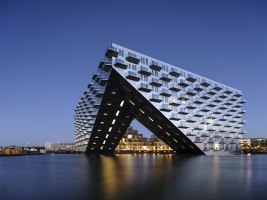
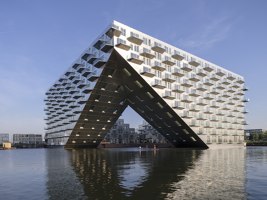
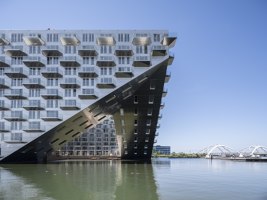
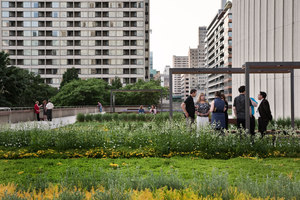
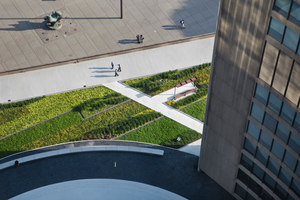
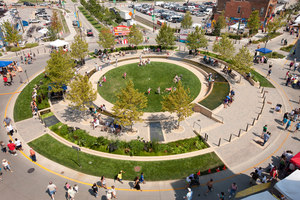
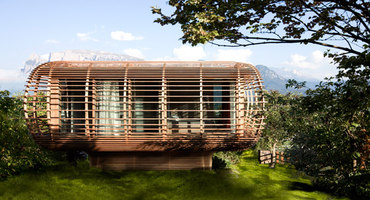
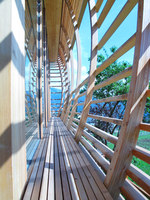
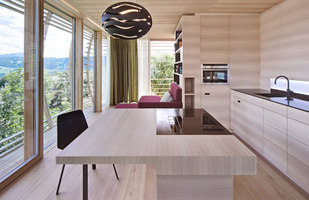
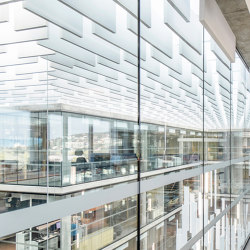
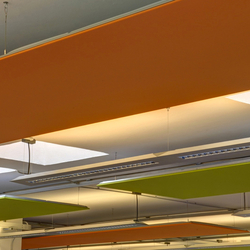
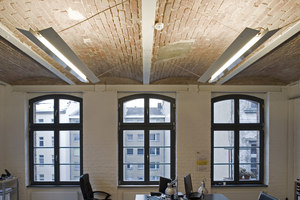
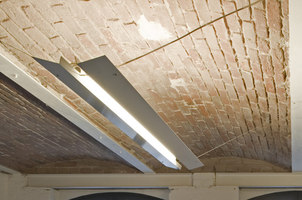
Sainsbury Laboratory by Stanton William is one of the six projects shortlisted for this year’s RIBA Stirling prize; photo by Hufton+Crow
UK’s Royal Institute of British Architects has just announced the six projects which have made it to the shortlist of this year’s RIBA Stirling Prize. Among the contenders for Britain’s top architecture award are: Hepworth Gallery by David Chipperfield Architects, London Olympic Stadium by Populous, Lyric Theatre in Belfast by Dublin-based O’Donnell + Tuomey, Maggie’s Cancer Centre by OMA, New Court also by OMA (with Allies and Morrison) and Sainsbury Laboratory by Stanton Williams. The winner, selected by the judges led by the architect and former president of the Royal Academy Sir Nicholas Grimshaw, will be announced in Manchester on Saturday 13 October.
visit Architonic’s facebook page to view the images of all shortlisted projects

Dallas Centre of the Performing Arts by REX and OMA; photo by Tim Hursley
Two renowned architectural practices, REX and OMA, have collaborated on this Dallas Centre of the Performing Arts, also known as Dee and Charles Wyly Theatre, which was completed in 2009. Realised as ‘flexible and multi-form while requiring minimal operational costs’, the 7700-square-meters 575-seat theatre can be easily transformed into a number of configurations including proscenium, thrust, and flat floor, thus enabling ‘directors and scenic designers to choose the stage-audience configuration that fulfills their artistic desires.’ (more…)

© CCTV, Beijing, China, 2010. OMA. Photograph by Jim Gourley. © Jim Gourley
In the second installment of Friday Food For Though – a series which we have started, rather impromptu, last Friday, we’d like to draw your attention to the OMA/ progress exhibition, along with the plethora of accompanying events, which has opened yesterday (6 October) at one of our favourite London venues – the Barbican.
Dedicated to the work of the acclaimed Dutch architectural practice OMA, the show is guest curated by the Belgium-based collective, Rotor (authors of the last year’s Belgian Pavilion at the Venice Architecture Biennale). Moreover, an impressive number of talks, debates, tours and walks led by associates and collaborators of OMA as well as invited experts will take place throughout the run of the exhibition.
view the detailed programme of events accompanying the OMA/ progress
OMA / Progress
6 Oct 2011 – 19 Feb 2012
Barbican Art Gallery, London

All Images: Courtesy of the Office for Metropolitan Architecture (OMA)
Part of an effort to regenerate the Kop van Zuid area of Rotterdam, Netherlands, these three multifunctional towers will feature space for corporate offices, residential apartments, a hotel / congress, restaurants, retail / public program and parking – creating a bustling vertical city that is active 24 hours a day. The project is situated on the Wilhelminapier, near the Hotel New York, the Luxor Theater and the cruise terminal. The Wilhelminapier is part of the Kop van Zuid district of Rotterdam, close to the Erasmus Bridge, and will develop into an exclusive residential / commercial location in the future. De Rotterdam will be a mixture of uses, such as offices, apartments, hotel, congress, restaurants, retail / public program and parking. This mixed usage will enable the Wilhelminapier to develop into a genuine city center location, with a host of facilities ensuring that something is happening at all times.
Project Architect: Kees van Casteren
The name of the building – De Rotterdam – recalls the maritime history of the area. In fact, the Wilhelminapier is the former departure point of the Holland-America line, from where tens of thousands of Europeans immigrated to the United States in decades past. One of this company’s famous ships was named De Rotterdam. This building accommodates functions that create a synergetic use of the different facilities by the various occupants. For example, residents can use the fitness and catering facilities, and office users can benefit from the conference and hospitality facilities in the hotel and catering establishments.

Partners-in-charge: Rem Koolhaas, Reinier de Graaf, Ellen van Loon
The different programs are organized into different blocks, that – essentially shell and core – provide the individual users the great flexibility. The clustering of these blocks into a functioning ensemble creates a seemingly random composition that allows the building to blend into its context and yet maintain a distinctive look. Taking the mixed usage as the basis, OMA developed a very striking architectural concept – ‘the vertical city’ – a building of approximately 155.000 m2 floor area and 150 meters high. The ground floor is largely devoted to public amenities, combined with entrance lobbies of the offices, apartments and hotel. Three access cores suffice to serve the different parts of the building and provide access for each program. The lobbies for the offices and hotel, the restaurants and public program in the plinth are interconnected by a large public hall that serves as a general traffic hub for all the functions and users in the building.
to OMA