March 2010
M T W T F S S
« Feb    
1234567
891011121314
15161718192021
22232425262728
293031  

Posts tagged as 'Netherlands'

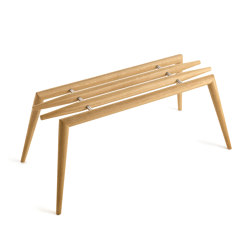
'Bridge' table by Joris Laarman Lab

Bionic design is the combination of the latest technological processing methods and organic form. The ‘Bone Chair’ by the Netherlands designer Joris Laarman from 2006 was a prime example of this trend. Inspired by the growth of bones, this elegant high tech sculpture was created with the help of a special tool developed by General Motors Engineering Europe.

'Bone' chair by Joris Laarman

“In 2006, Laarman’s Bone Chair revolutionized the design process by using an algorithm to translate the complexity, proportion and functionality of human bone and tree growth into a chair form. The algorithm, originally used by the German car industry, enabled him to reduce and strengthen his designs by optimizing material allocation, weight and stability, while minimizing material input. In his own words, he sculpted “using mother nature’s underlying codes.”

'Cumulus' table by Joris Laarman

The exhibition at Friedman Benda Gallery showcases the last five years of Joris Laarman’s investigation. It will be open until 10 April.


to the Friedman Benda Gallery website


to the Joris Laarman website

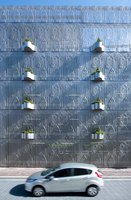
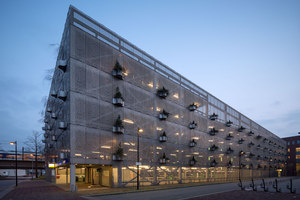
Mercator Sportplaza by Venhoeven CS

Mercator Sportplaza by Venhoeven CS, photo by Luuk Kramer

The Amsterdam based architectural practice Venhoeven CS realised this sports center for their hometown.


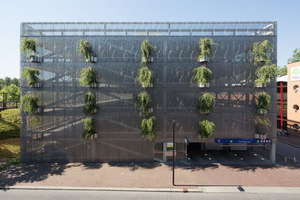
“De Baarsjes in Amsterdam is a multicultural neighbourhood that is home to people from 129 different countries. The city district wanted to boost community life in the neighbourhood. The authorities therefore chose a building which combines swimming pools, a therapy pool, fitness, aerobics, a sauna and steam bath, a party centre, café and childcare alongside a fast food restaurant. Each individual element attracts different target groups, so the entire population will be able to use it in the end. Inside, everyone can see other activities, intriguing their interest and inspiring them to use other facilities as well. Because the building was constructed in a park, people living nearby it requested that it would be as green as possible; we completely covered it in vegetation.”

Mercator Sportplaza by Venhoeven CS

Mercator Sportplaza by Venhoeven CS, photo by Luuk Kramer

“With its green façades and roof, Sportplaza Mercator marks the start and end of the Rembrandtpark. From a distance, it seems like an overgrown fortress flanking and protecting the entryway to the 19th-century city. Glimpsed through the glass façade, a modern spa-style complex glistens, complete with swimming pools, fitness space, and restaurant and party facilities. The entrance seems like a departure hall from which the various visitors can reach their destination. 

The building was designed as a city – a society in miniature – inside a cave. The building is full of lines of sight and keyholes that offer perspectives on the various visitors, activities and cultures in the building. Sunlight penetrates deep into the building’s interior through all sorts of openings in the roof. Low windows frame the view of the street and the sun terrace.”

Mercator Sportplaza by Venhoeven CS

Mercator Sportplaza by Venhoeven CS, photo by Luuk Kramer

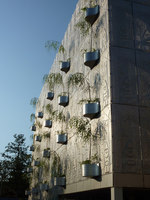
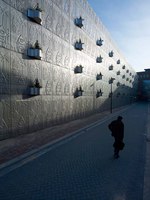
“The vertical garden is originally developed by Patrick Blanc. His vertical gardens have been applied in the Musée du Quai Branly in Paris. For Sportplaza Mercator, the Dutch company ‘Copijn’ (Utrecht) has further developed the concept. This product is called “the Wonderwall”. The wall consist of different layers. First there is a steel construction with its own foundation, attached to the roof construction of the building. The second layers is a physical separation wall between inside and outside. The third layer, which is attached on the steel construction is the ‘growing wall’, made of metal, plastic and a felt fleece with notches and small buckets. Every plant grows in its own bucket. Integrated in the growing wall is a rain and feeding system with hoses and sensors. Over 50 different kinds of plants, bushes and trees have been planted in the roofs and facades. Every wall has its own climate and demands therefore different kinds of plants.”

Mercator Sportplaza by Venhoeven CS

Mercator Sportplaza by Venhoeven CS, photo by Luuk Kramer

Mercator Sportplaza by Venhoeven CS

Mercator Sportplaza by Venhoeven CS, photo by Luuk Kramer

Mercator Sportplaza by Venhoeven CS, photo by Luuk Kramer

Mercator Sportplaza by Venhoeven CS, photo by Luuk Kramer

Design team: VenhoevenCS – Ton Venhoeven (project architect), Richèl Lubbers (project manager), Danny Esselman, Manfred Wansink, Jos Willem van Oorschot, Erik de Vries, Thomas Flotmann, Peterine Arts


Client: Sportfondsenbad Nederland, Municipality of Amsterdam – De Baarsjes district


 to the Venhoeven CS profile @ Architonic


more architcture projects @ Architonic

'Fragments fo Nature' by Lex Pott

'Fragments fo Nature' by Lex Pott

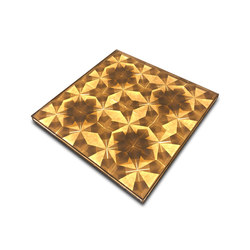
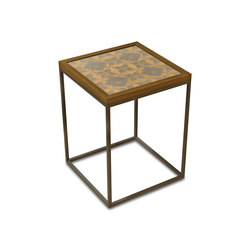
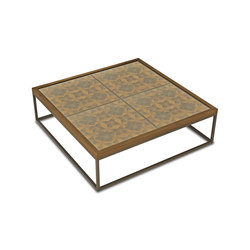
With his graduation project ‘Fragments Of Nature’ the Dutch designer Lex Pott combines the geometric forms of industrially processed wood with the original, organic structure of a tree in a series of items of furniture.

'Fragments of Nature' by Lex Pott

'Fragments of Nature' by Lex Pott

“Where the legs of his table meet its top, the form of a tree trunk can easily be seen. The contours of his cupboard are also directly derived from the tree trunk. The pieces of furniture are reproducible, yet remain a unique fragment of the natural world.”

'Fragments fo Nature' by Lex Pott

'Fragments fo Nature' by Lex Pott

'Fragments fo Nature' by Lex Pott

'Fragments fo Nature' by Lex Pott


'Fragments fo Nature' by Lex Pott

'Fragments fo Nature' by Lex Pott

to the Lex Pott website

Panta Rhei School by i29 and Snelder Architecten

Panta Rhei School by i29 and Snelder Architecten

Together with the interior architects of i29 the Dutch practice Snelder Architecten realised this interior design for a public school in Amstelveen in the south of Amsterdam.

Panta Rhei School by i29 and Snelder Architecten, photo by Jeroen Musch

Panta Rhei School by i29 and Snelder Architecten, photo by Jeroen Musch

Here is what the architects explain:


Architecture and interior
“In the design for the new accommodations of public school Panta Rhei in Amstelveen (NL) there is a lot of attention on the balance between freedom and a sense of security. Snelder Architecten realised a building with many open multifunctional spaces where students can make themselves familiar with the teaching material. The interior design by i29 links up with that perfectly and gives the spaces an identity that connects with the students’ environment and addresses them directly and personally. i29 let itself be inspired by the name of the school. Panta Rhei, meaning ‘everything flows’, ‘everything is in motion’. This led to a design that leaves space for the imagination of the users, offering elements that can be used flexibly, which also propagates the school’s identity.”

Panta Rhei School by i29 and Snelder Architecten, photo by Jeroen Musch

Panta Rhei School by i29 and Snelder Architecten, photo by Jeroen Musch

Poems 

“Throughout the entire school poems have been applied to the linoleum floors and the furniture. The thought behind this is that there are moments outside of the classroom when you can learn and gain insights: often a casual setting is very inspiring. Maybe these poems provide a different perspective in an unguarded moment. i29 commissioned the poet Erikjan Harmens for this. He worked out themes like insecurity and friendship together with the students. The open texts leave room for their own interpretation. i29 modelled the poems in ‘carpets of text’ in which the letters stick together and seem to flow from each other. From a distance the texts form intriguing graphic patterns. This imagery has been implemented by i29 in the new school logo, the facade and the signposting throughout the school. The furniture, which was made to measure, is informal and dynamic. Because work takes place both in groups and individually, i29 itself designed tables in asymmetrical, angular shapes. These shapes allow the furniture to be linked together in all kinds of ways and different configurations can be made, such as square, circular or star-shaped set-up. This means the pieces can be used in the general spaces as well as in the classrooms and staff rooms.”

Panta Rhei School by i29 and Snelder Architecten, photo by Jeroen Musch

Panta Rhei School by i29 and Snelder Architecten, photo by Jeroen Musch

Structures 
“i29: ‘We think in structures and rhythms and not in taste or style. You can look at it as music which deals with harmony and contrast. One tone is not unconnected to the next and silence is essential.’ i29 has realised a spatial composition which has been carried out without compromise. Over the neutral basis of tables and benches there is a fine fabric of black elements; consisting of the poems, the hassocks and the Magis One-chairs. The furniture is strong and robust, but does not look bulky, rather refined. Remarkable in this context is the choice of the Grcic chair. It matches well here because of its technical aura and it urges you to think about the design and production process. It is a vocational school after all. Just because this is not a university, does not mean you do not have to challenge the students.”

Panta Rhei School by i29 and Snelder Architecten, photo by Jeroen Musch

Panta Rhei School by i29 and Snelder Architecten, photo by Jeroen Musch

Panta Rhei School by i29 and Snelder Architecten, photo by Jeroen Musch

Panta Rhei School by i29 and Snelder Architecten, photo by Jeroen Musch

more information @ Arkinetia

Library of the University of Amsterdam by Studio Roelof Mulder & bureau Ira Koers

Library of the University of Amsterdam by Studio Roelof Mulder & bureau Ira Koers

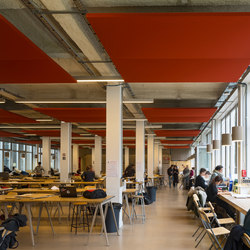
In close collaboration the Dutch practices Studio Roelof Mulder and bureau Ira Koers realised the new interior design for the Library of the University of Amsterdam. The project won The Great Indoors Award 2009 in the category Serve & Facilitate.

Library of the University of Amsterdam by Studio Roelof Mulder & bureau Ira Koers

Library of the University of Amsterdam by Studio Roelof Mulder & bureau Ira Koers

“A library whose decor no longer consists of books has been turned into a ‘home’ in which to study.

The UvA’s enormous collection of books is kept in closed repositories, book depots and at various open locations. A growing number of students, anywhere from 1500 to 5000, visit the University Library every day in order to study and pick up their digitally ordered books. Despite plans for a new building in the future, the university wished to have a new, temporary interior design for the 2500 m2 space that would comprise study rooms plus 235 extra workspaces, the canteen, the information centre with its desk, the hallways, and an automated lending area.”

Library of the University of Amsterdam by Studio Roelof Mulder & bureau Ira Koers

Library of the University of Amsterdam by Studio Roelof Mulder & bureau Ira Koers

“To offer students a good second home, we wanted to achieve two important things: a space like the white page of a book where the students themselves would play the main role in determining how it is filled in, and in certain areas a domestic atmosphere where the students could also study informally.

For instance, in one of the study rooms you will find a number of kitchen tables where you can work in groups under the lamp, a chesterfield couch for reading a newspaper, various sitting areas for a short break and special telephone areas in the hallways between the quiet study rooms. The columns in the canteen are transformed into illuminated trees with low energy light bulbs.”

Library of the University of Amsterdam by Studio Roelof Mulder & bureau Ira Koers

Library of the University of Amsterdam by Studio Roelof Mulder & bureau Ira Koers

“Until recently, borrowed books could only be picked up at the library desk during office hours.

Now the students can pick up their ordered books themselves in a newly designed red room that is open until midnight, including weekends. In red cases with 1105 red crates, piles of books lie ready for the borrowers. Because these books come from different locations, this is the heart of the University Library, with a back office hidden from view in which the books are readied for self-service with the RFID system.”

Library of the University of Amsterdam by Studio Roelof Mulder & bureau Ira Koers

Library of the University of Amsterdam by Studio Roelof Mulder & bureau Ira Koers

Library of the University of Amsterdam by Studio Roelof Mulder & bureau Ira Koers

Library of the University of Amsterdam by Studio Roelof Mulder & bureau Ira Koers


to the bureau Ira Koers website


to the Studio Roelof Mulder website

PostPanic - Westerdoksdijk by Maurice Mentjens

PostPanic - Westerdoksdijk by Maurice Mentjens, photo by Arjen Schmitz

The Dutch interior and furniture designer Maurice Mentjens recently unveiled this new office for the advertising agency PostPanic – the company produces both commercial projects for the international advertising, retail, broadcast and music industries and its own internal projects – in Amsterdam.

'A professional playground' by Maurice Mentjens, photo by Arjen Schmitz

'A professional playground' by Maurice Mentjens, photo by Arjen Schmitz

“PostPanic’s projects are strongly focused on images and perception, and the design and layout of the studio directly influence that. This explains why PostPanic, when planning to move in 2008 to a new building at the Westerdoksdijk in Amsterdam, commissioned designer Maurice Mentjens (Holtum, The Netherlands) to design an interior that not only would be pleasant and workable, but also inspiring, and a reflection of the studio’s creative and headstrong mind. 

Mentjens’ field of activity: an over five meters high, empty room on the ground floor, the big windows in the slanted facade overlooking the river IJ. Large concrete columns support the concrete construction. 

In the briefing, functionality was the biggest priority. To ensure a constant quality, PostPanic purposely chooses to produce, direct, design and animate in-house to stay truth to their original vision, once in production. This approach requires that the various departments of PostPanic each have their clearly divided and defined areas. But at the same time PostPanic required to maintain as much as possible the openness and transparency that the place offered. The design also had to take into account that the workforce fluctuates from 14 to 40, depending on the different stages of production.”

PostPanic - Westerdoksdijk by Maurice Mentjens, photo by Arjen Schmitz

PostPanic - Westerdoksdijk by Maurice Mentjens, photo by Arjen Schmitz

Point of departure 

“In his design Mentjens took the existing concrete structure, and more specifically the large concrete columns, as his point of departure. The distance between the columns defines the dimensions of the subsequent areas. The width of production room, meeting room and staff room measures the span between two columns, the studio up on the mezzanine measures twice this size. 

By introducing the mezzanine, Mentjens creates the required floor space without compromising the studio’s open feel. Because the low floor height doesn’t allow a lowered ceiling, pipes stay on display. Combined with the large concrete columns, the smooth concrete floors, the lack of thresholds and the fluorescent tubes on the ceiling, this emphasizes the slightly raw, industrial feel the interior has to it.”

PostPanic - Westerdoksdijkby Maurice Mentjens, photo by Arjen Schmitz

PostPanic - Westerdoksdijkby Maurice Mentjens, photo by Arjen Schmitz

Ground floor 

“The tall hall, a neutral space with bold elements, at the same time functions as the entry and as exhibition space, is in use for seminars and film screenings and acts as the office’s living room. Wedged between two columns is a monumental, oak grandstand that takes up a quarter of the studio’s width and doubles as stairs to the mezzanine. The grandstand is facing a screen that’s suspended above the bar. This detached bar, tiled in white tiles, is simultaneously an autonomous object and recalls an old-fashioned kitchen. 
Parallel to the facade, diagonally placed, is a grand table, meant for reading and dining. This 16-seater (5mx1.20m) holds a lowering in its centre to store books and magazines. Bar, grandstand, table and screen together make up the office’s ‘recreation zone’. From time to time the employees, sitting on the grandstand, a beer in hand, enjoy a film or football match together. 
Attached to the ceiling above the grandstand, an installation of fluorescent tubes radiates over the different areas.”

PostPanic - Westerdoksdijk by Maurice Mentjens, photo by Arjen Schmitz

PostPanic - Westerdoksdijk by Maurice Mentjens, photo by Arjen Schmitz

“Attached to two columns in the kitchen are two wooden beams that both serve as a bookcase and as a demarcation between the kitchen and the adjacent production room. Floors and walls in the production room are covered with a deeply red, Persian-style carpet, which softens the nature of the concrete and at the same time dampens the sounds. This semi-open space holds just one, elongated table (6.20mx2m). Employees store their belongings in trolleys that can be parked in a grey, open cupboard. The cupboard extends till the first floor’s handrail height and thus acts as the upper side of the staff room’s balustrade. 

The meeting room – floor, walls and table carpeted as it being one single object – with its fluid lines resembles a futuristic grotto. Large wooden pivot doors separate meeting room and hall. 

The mirroring walls in the edit room invoke an illusion of endless space. A carpeted niche in one of the walls forms a bench on which clients can sit down and watch clips. These clips are projected on a big screen that is integrated in a purposely built, glossy black edit table.”

PostPanic - Westerdoksdijk by Maurice Mentjens, photo by Arjen Schmitz

PostPanic - Westerdoksdijk by Maurice Mentjens, photo by Arjen Schmitz

continue @ Architonic


to the Maurice Mentjens website

'RoomProp' by Carolina Wilcke

'RoomProp' by Carolina Wilcke

The Dutch designer and recent graduate of the Man and Living department at Design Academy Eindhoven Carolina Wilcke designed this room devider made of plain oak with coloured areas of different kinds of thread.

'RoomProps' by Carlona Wilcke

'RoomProps' by Carlona Wilcke

“As a three-dimensional painting is gives the space atmosphere and warmth. It speaks to the imagination and at the same time creates space and possibilities.”

'RoomProps' by Carolina Wilcke

'RoomProps' by Carolina Wilcke

to the Carolina Wilcke website

The Why Factory by MVRDV

The Why Factory by MVRDV, photo by Rob't Hart

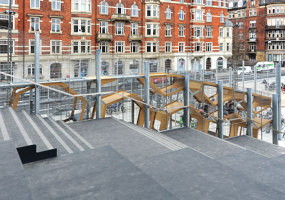
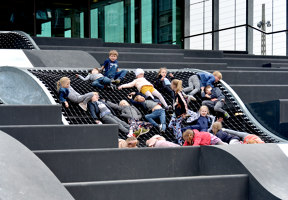
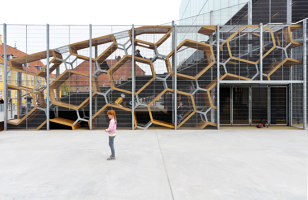
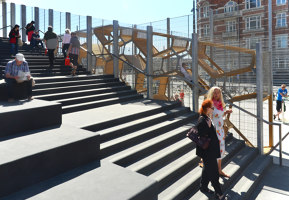
The Dutch architects of MVRDV designed this tribune, a new think tank called ‘‘The Why Factory’’, at the Faculty of Architecture at the Delft University of Technology. The project was awarded with this year’s LAi prize. The flexible  furniture are designed by Richard Hutten.

The Why Factory by MVRDV

The Why Factory by MVRDV, photo by Rob't Hart

“After a fire destroyed their premises, The Why Factory and the faculty of architecture of Delft University moved into the former main building of the university. An interior courtyard was created and designated as the new residence of The Why Factory. MVRDV designed the three floor tall wooden structure, containing lecture halls, meeting rooms and the premises of the research institute. An auditorium stair climbs to the top, literally putting the students on top of their teachers.


The structure distinguishes itself by its bright orange colour which clearly identifies The Why Factory as an independent research centre within the Faculty of Architecture, Delft University of Technology. Furniture designer Richard Hutten designed flexible furniture to allow the space around the tribune to switch function between research hall, lecture hall and exhibition space.”

The Why Factory by MVRDV

The Why Factory by MVRDV, photo by TU Delft

The Why Factory by MVRDV, photo by Rob’t Hart

The Why Factory by MVRDV, photo by Rob’t Hart


Client: TU Delft

Budget: 150.000 Euro (Construction)

Surface: 370m2 Tribune and 195m2 orange floor

Site :950m2

Location: Julianalaan Delft, Netherlands


Projectteam: Winy Maas, Jacob van Rijs and Nathalie de Vries with Anton Wubben,  Riccardo Ferrari, Simon Potier, Jonas Klock and Diana Lopez


Engineering: Braaksma&Roos Architectenbureau, Den Haag

Contractor:  Meesterbouw BV , Den Haag

Interior: Meesterbouw BV , Den Haag

Furniture: Richard Hutten, Rotterdam, NL

Electrical Installations E.T.A.B. de Vest, Delft

Installations Cofely West Utiliteit BV, Rijswijk 

Lighting: Henk van der Geest, Amsterdam, NL

Floor finishes Cem Plaat BV,  Enschede

Loose furniture (chairs etc.) Vitra, Ouderkerk aan de Amstel

Construction: ABT


to the MVRDV website

Section II by Bas Princen

Section II, 2007, by Bas Princen

The Rotterdam based photographer Bas Princen was trained as an architect before he decided to focus on architectural photography. With his photographs of giant construction sites and apparently absurd human artefacts he describes the oddity of human ‘civilisations’.

Mokattam ridge (garbage city) Cairo 2009 by Bas Princen

Mokattam ridge (garbage city) Cairo, 2009, by Bas Princen

“I go out to find photographs [...] in which the artificial and the natural take each other’s forms and in which one is unable to see if things are being constructed or destroyed. I think that is the most interesting thing that can be said right now about the cities in which we live, and the landscapes in which we dwell (and vice versa).” Bas Princen explained in a conversation with Mark Pimplott.

Blvd, 2009, by Bas Princen

Blvd, 2009, by Bas Princen

Valley (China), 2008, by Bas Princen

Valley (China), 2008, by Bas Princen

Future olympic park, 2007, by Bas Princen

Future olympic park, 2007, by Bas Princen

to the Van Kranendonk Gallery website

'e-volved' by FueraDentro

'e-volved' by FueraDentro

The London-based designer Timothy Schreiber designed this dining room table for the Dutch manufacturer FueraDentro. The base consists of two different aluminium casts, which assembled built an organic bone-structure.

'e-volved' by FueraDentro

'e-volved' by FueraDentro

Here is what the designer has to say:

“e-volved table’s design was inspired by natural fluid patterns and naturally grown forms. The approach was translated into an initial digital model, which was subsequently optimized using digital structural and articial intelligance algorithms. Special attention was paid to the organic, bone-like connections at the branches, where the complete ensemble splits up into it’s subparts, which make the table demountable for transport convenience.”


more FueraDentro products @ Architonic

The Independent Source for
Products, Materials and Concepts Architonic | architecture and design
Fascinating World of Design for
Modern Kids Kidsmodern - Fascinating World of Design for Modern Kids
Broadcasting Architecture Worldwide Broadcasting Architecture Worldwide
International Architecture News International Architecture News
Online Design Magazine Online Design Magazine