March 2010
M T W T F S S
« Feb    
1234567
891011121314
15161718192021
22232425262728
293031  

Posts tagged as 'Japan'

Hoshakuji Station by Kengo Kuma & Associates

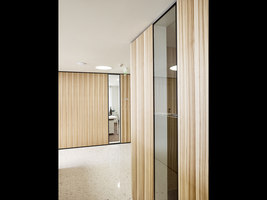
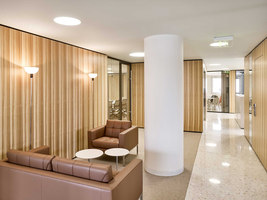
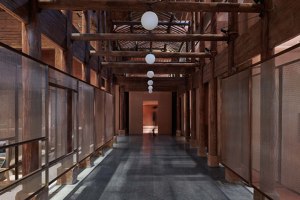
Kengo Kuma Associates realised this renovation of the Hoshakuji Station north of Tokyo. Parts of the station are made from re-used Oya stone which was left over from an old warehouse that existed in this area.

Hoshakuji Station by Kengo Kuma & Associates

Here is what Kengo Kuma himself has to say:

“The starting point was to open the east exit of Hoshakuji Station. We aimed at connecting the west and east sides of the station, which had been divided by the railroad. It eventually meant the link between the west and the east of the town of Takanezawa, and between the station and Chokkura Plaza & Shelters, which we designed in the east exit area. It is not a design of a station as a box, but is as an aperture. The aperture starts at its ‘neighbor’, Chokkura Plaza. We first decided to preserve the old warehouse of Oya stone that had existed in the area. Then we took advantage of pores in Oya stone, and used them in the new structural system, in which steel frame and Oya stone are combined diagonally, and added the system to the warehouse. Following the design of this ‘neighbor’, we extended this diagonal skin to the other ‘pore’ or ‘aperture’, which is the station. By such extension and connection, we attempted to link not only the station’s west exit and east exit, but also the station and its location.
In order to reduce the weight, we used lauan-made plywood for structure, instead of Oya stone. By using wood, I wanted to revive the humane and warm atmosphere once any station building used to have. The touch of this station building would be conveyed further to the landscape of paddy fields and wooden houses in the town of Takanezawa.
Our emphasis was that by creating ‘pores’, things could be pulled together and restore the community that had been long fragmented.”

Hoshakuji Station by Kengo Kuma & Associates

Hoshakuji Station by Kengo Kuma & Associates

Hoshakuji Station by Kengo Kuma & Associates

Hoshakuji Station by Kengo Kuma & Associates

to the Kengo Kuma & Associates profile @ Architonic


read also: ‘The power of the empty space’

Architecture Architecture

Tue 16.3.

‘House K’ by Sekkei-sha (JP)

Posted by Nora Schmidt - Tagged as: , , ,

'House K', photo by Seiya Miyamoto

The Japanese architectural practice Sekkei-sha, founded by Yoshichika Takagi, designed this broad single family residence on Hokkaido, the northern Japanese island. The interior is special for its village-like central space – the living area and kitchen – which seems to be surrounded by other residential houses.

'House K', photo by Seiya Miyamoto

“Considering the cold climate in Hokkaido, it didn’t seem to be the most appropriate solution to make a wide open interior space as outdoors, yet, keeping the house shape on the exterior.
We tried to see if we could design a space that would be ‘indoor’ (which was closed in terms of the thermal environment) but would give a feeling of being ‘outdoors’ as a backdrop within the building.

The given condition of making an open indoor space led directly to the idea of making house-shaped indoor rooms. If these house shapes were scattered, it would give a village-like view.
The shape of a house is a code for dividing space indoors and outdoors, and a village is a code that implies outdoors. By using these codes, we thought that an interweaved scenery of indoor and outdoor would be made possible.”

'House K', photo by Seiya Miyamoto

“After some trials, it seemed that a set of more than 3 house shapes would give a village feeling, which would potentially create a relationship between indoor and outdoor.
If we could cover these entirely with a bigger house shape, this would function as an indoor space in terms of thermal environment.

Eventually, we managed to create a interweaved scenery between ‘indoors’ and ‘outdoors’ by placing 6 house-shaped profiles within one large exterior that envelops the entire place.
One of the six house shapes was made into an outdoor terrace. Indoors, there would be a village-like view using the help of the code for outdoors, inside the building. This kind of control functions to blur the definition of ‘indoors’ and ‘outdoors’, and this is where interweaving takes place.
As a container, we made those big house shapes as interior, but when people actually live there and use the space, the feeling of the interior switches between an indoor space to an outdoor space.
It would only be then that this idea of an interweaved living space would be expressed and perceived.”

'House K', photo by Seiya Miyamoto

'House K', photo by Seiya Miyamoto

'House K', photo by Seiya Miyamoto

more information about the project @ Architonic

2 Courts House by Keiji Ashizawa, photo by Daici Ano

This single family residence located in a typical Tokyo urban environment of closely built surrounding, was designed by the Japanese preactice Keiji Ashizawa Design.


“The four-storey house resolves privacy and light by the idea of two cascading courtyards which spills gradual light into the innermost volume of the house. Due to the differing light intensity from the two courtyards, each space also differs in character and function.”

2 Courts House by Keiji Ashizawa, photo by Daici Ano

2 Courts House by Keiji Ashizawa, photo by Daici Ano

2 Courts House by Keiji Ashizawa, photo by Daici Ano

2 Courts House by Keiji Ashizawa, Photo by Daici Ano

2 Courts House by Keiji Ashizawa, photo by Daici Ano

Structure Engineer: Akira Suzuki
Lighting/Furniture: Izumi OKayasu/super robot


more information about the project @ Architonic

‘11Boxes’ in Tokyo / Japan by Keiji Ashizawa Design
'NE apartment', photo by Hiroyasu Sakaguchi

This serpentine apartment builduing in the center of Tokyo was designed with the collaboration of three Tokyo based architectural practices: Nakae Architects, Akiyoshi Takagi Architects and Ohno Japan.

'NE apartment', photo by Hiroyasu Sakaguchi

“This 8-unit rental apartment house complex was designed to house motorcycle enthusiasts, with a built-in garage included in every unit.
The building is located on a flag-shaped plot near the apex of a triangular block, with a certain degree of open space toward the main road to the south.
The c-shaped design was a practical decision to allow the residents to access their apartments through a common alley that leads right to the center of the complex. The wall on the entrance side was curved to provide maximum space on the outside, while guaranteeing sufficient volume for each apartment unit and wall length to fit 8 entrance doors. The resulting little square avoids giving the impression of a narrow and dark dead end, and allows the residents to rotate their bikes easily.
The walls separating each apartment unit were disposed in a radial pattern, each with a gentle curve that leads them to meet the external wall at a right angle. By connecting the angles of each room, the curved walls contribute to give the impression of a more spacious environment. The entire structure is designed as an extension of the road, smoothly following the movement of its residents as they drive through the alley, enter the central square, park their motorcycle in the garage and move upstairs to their living quarters.”

'NE apartment', photo by Hiroyasu Sakaguchi

“The building is a reinforced concrete structure composed of seven walls and a slab. The main characteristic of the structure lies in the fact that the reinforced walls, composed of an in-plane rigid frame of columns and beams, were disposed in a radial pattern. The walls rely on the transfer of horizontal force from the slabs instead of using perpendicular beams. They are in fact vertical cantilevers fixed in the foundation of the building. Although the centrally-oriented radial displacement is vulnerable to rotational forces, the changing angles of each wall reinforce the structure’s resistance.
Because the structure of the building relies on the seven interior walls, the exterior wall was handled using a dry construction method. This allowed us to continue studying the emplacement and size of the wall openings in accordance with the uneven surroundings until the very last moment of the construction process. The functions of each wall are also enhanced by a clear division of their roles: structure and sound insulation for the interior walls, openings and thermal insulation for the exterior walls. Despite their curve, the interior walls always meet the outside wall at right angles, preventing the presence of sharp corners and thus improving livability.
On the entrance side, each floor is fitted with a continuous strip of curved windows, with a comparatively wider opening on the second level. The orientation of each room was set to avoid a direct view of the opposite apartment. Combined with a double-paned window, this setting provides a peculiar feeling of privacy.”

'NE apartment', photo by Hiroyasu Sakaguchi

'NE apartment', photo by Hiroyasu Sakaguchi

'NE apartment', photo by Hiroyasu Sakaguchi

Design team:
Yuji Nakae / NAKAE ARCHITECTS
Akiyoshi Takagi / Akiyoshi Takagi Architects
Hirofumi Ohno / Ohno JAPAN
Project partners:
General Constructor: FUZZY, CO., LTD.

Site Area: 201.89m2
Building Area: 96.34m2
Total Floor Area: 289.02m2
Structure: Reinforced Concrete and Steel, 3 stories
Maximum Height: 8050mm
Design Period: Dec.2006 – May.2007
Construction Period: Jun.2007 – Dec.2007


to the Nakae Architects profile @ Architonic

Rolex Learning Center by SANAA in Lausanne, Switzerland

Rolex Learning Center by SANAA in Lausanne, Switzerland

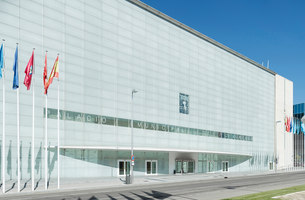
The Rolex Learning Center, designed by leading Japanese architectural practice SANAA, has opened in Lausanne, Switzerland. Situated on the campus of the EPFL Ecole Polytechnique Fédérale de Lausanne, the centre will function as a cultural hub for both students and the public, featuring a library with half a million volumes.

Rolex Learning Center by SANAA in Lausanne, Switzerland

Rolex Learning Center by SANAA in Lausanne, Switzerland

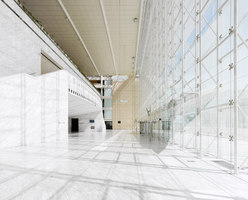
What is particularly striking about this project is that the 20,000 square-metre interior is articulated as single, continuous fluid space, providing, as the institution’s press release puts it, ‘a seamless network of services, libraries, information gathering, social spaces, spaces to study, restaurants, cafés and beautiful outdoor spaces’.

Rolex Learning Centre by SANAA in Lausanne, Switzerland

Rolex Learning Center by SANAA in Lausanne, Switzerland

There is something of the outside inside with this building, when one thinks of its geopraphical context. The EPFL campus is situated on a site that overlooks Lake Geneva and the Alps. The changing topography of this landscape, it could be argued, is echoed in the undulating interior landscape of this remarkable project, which was financed by the Swiss government in partnership with major Swiss businesses.

Rolex Learning Center by SANAA in Lausanne, Switzerland

Rolex Learning Center by SANAA in Lausanne, Switzerland

'Les Aventuriers' by Shun Hirayama Architecture, photo by Daici Ano

'Les Aventuriers' by Shun Hirayama Architecture, photo by Daici Ano

This single family villa in in Kanagawa Prefecture on a mountainside that overviews a sea and a city was designed by the Tokyo based practice Shun Hirayama Architecture. It is composed of individual volumes which are connected through tight and angled accesses, bridges and corridors. 

'Les Aventuriers' by Shun Hirayama Architecture, photo by Daici Ano

'Les Aventuriers' by Shun Hirayama Architecture, photo by Daici Ano

“We forwarded the design, piling up stories little by little, as if animals create their nest steadily. The traces of the thoughts and processes appear remarkably. In the interior of the building that was shaped to fit the landform, walls set in diverse angles, various ceiling heights and ten different floor levels exist and in the each space dissimilar shades live. The wind that enters inside the one-room interior space feels like they came between trees, and it feels like sitting on a natural stump, when sitting on a slight level difference. 

Les aventuriers” is a title of a story that tours a creation of the house on this particular site”, explains Shun Hirayama.

'Les Aventuriers' by Shun Hirayama Architecture, photo by Daici Ano

'Les Aventuriers' by Shun Hirayama Architecture, photo by Daici Ano

'Les Aventuriers' by Shun Hirayama Architecture, photo by Daici Ano

'Les Aventuriers' by Shun Hirayama Architecture, photo by Daici Ano

'Les Aventuriers' by Shun Hirayama Architecture, photo by Katsuhisa Kida / FOTOTECA

'Les Aventuriers' by Shun Hirayama Architecture, photo by Katsuhisa Kida / FOTOTECA

to the Shun Hirayama Architecture profile @ Architonic

'A House made of Two' by naf architect & design, photo by Toshiyuki Yano / Nacasa & Partners

'A House made of Two' by naf architect & design, photo by Toshiyuki Yano / Nacasa & Partners

The Tokyo and Hiroshima based practice naf architect & design recently finished this single family residence in Kanagawa, south of Tokyo. 

'A House made of Two' by naf architect & design, photo by Toshiyuki Yano / Nacasa & Partners

'A House made of Two' by naf architect & design, photo by Toshiyuki Yano / Nacasa & Partners

“This is a project of one family living in two houses built slightly apart from one another. 

One great volume of a house which covers the entire plot was supposed first. 
Then this volume was carved in a curve in three segments and two volumes at the both ends were built as two houses on the site.”

'A House made of Two' by naf architect & design, photo by Toshiyuki Yano / Nacasa & Partners

'A House made of Two' by naf architect & design, photo by Toshiyuki Yano / Nacasa & Partners

“The wood structures and finishing materials of two houses are standardized to emphasis the relations of two volumes being originally from “one great volume” and that they are one though apart. Carved volume in the middle became a courtyard leading to the approach to two houses. 

Having another house for movies at night, overnight guests or work at home allows the inhabitants the liberty to do what they please at a time they want. This distance between two houses may be just right for inviting grandparents to move in someday or providing privacy to children.”

'A House made of Two' by naf architect & design, photo by Toshiyuki Yano / Nacasa & Partners

'A House made of Two' by naf architect & design, photo by Toshiyuki Yano / Nacasa & Partners

'A House made of Two' by naf architect & design, photo by Toshiyuki Yano / Nacasa & Partners

'A House made of Two' by naf architect & design, photo by Toshiyuki Yano / Nacasa & Partners

'A House made of Two' by naf architect & design, photo by Toshiyuki Yano / Nacasa & Partners

'A House made of Two' by naf architect & design, photo by Toshiyuki Yano / Nacasa & Partners

Architects: Akio Nakasa / naf architect & design
 

Program: single family residence
 
Site area: 250 sqm
 
Building area: 106 sqm
 
Total floor area: 179 sqm


to the naf architect & design profile @ Architonic

'Green Mountain' by mA-style design of architecture & planning, photo by Yoshiharu Hama

'Green Mountain' by mA-style design of architecture & planning, photo by Yoshiharu Hama

The Japanese practice mA-style design of architecture & planning realised this residence for a famous Kendo-family in Makinohara City. It consists of two buildings, one for living (left), the other one is used as a Kendo school.

'Green Mountain' by mA-style design of architecture & planning, photo by Yoshiharu Hama

'Green Mountain' by mA-style design of architecture & planning, photo by Yoshiharu Hama

'Green Mountain' by mA-style design of architecture & planning, photo by Yoshiharu Hama

'Green Mountain' by mA-style design of architecture & planning, photo by Yoshiharu Hama

'Green Mountain' by mA-style design of architecture & planning, photo by Yoshiharu Hama

'Green Mountain' by mA-style design of architecture & planning, photo by Yoshiharu Hama

'Green Mountain' by mA-style design of architecture & planning, photo by Yoshiharu Hama

'Green Mountain' by mA-style design of architecture & planning, photo by Yoshiharu Hama

'Green Mountain' by mA-style design of architecture & planning, photo by Yoshiharu Hama

'Green Mountain' by mA-style design of architecture & planning, photo by Yoshiharu Hama

Location: Makinohara, Shizuoka 

Use: Single family residence, Kendo school (Kendojo) 
Design period: January, 2008 – June, 2009 
Construction period: June, 2009 – December, 2009 
Construction: Residence – wood frame construction, Kendojo – steel frame construction


to the mA-style design of architecture & planning @ Architonic

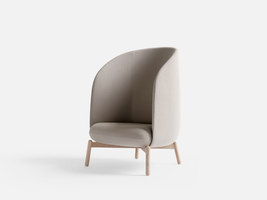
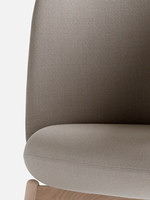
New armchair by Kitani

New armchair by Kitani

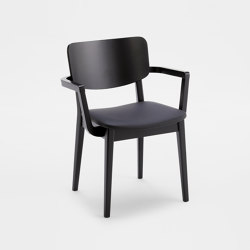
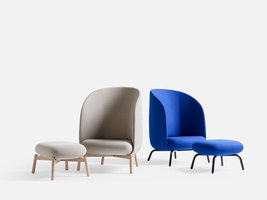
The Japanese manufacturer Kitani is one of the most ambitious producers of classic Scandinavian design, amongst other pieces of Finn Juhl, Nanna Ditzel and Ib Kofod-Larsen. 


At this year’s Stockholm Furniture Fair Kitani presented this new armchair, which doesn’t rank behind the classic archetypes.

New armchair by Kitani

New armchair by Kitani

to the Kitani website

'PLUS' by Mount Fuji Architects Studio, photo by Ken'ichi Suzuki

'PLUS' by Mount Fuji Architects Studio, photo by Ken'ichi Suzuki

This luxury residence with view on the Pacific Ocean was designed by the Tokyo based Mount Fuji Architects Studio. It is composed of two volumes which are built at right angles to one another.

'PLUS' by Mount Fuji Architects Studio, photo by Ken'ichi Suzuki

'PLUS' by Mount Fuji Architects Studio, photo by Ken'ichi Suzuki

 Here is what the architects explain:

The site locates on mountainside of Izu-san, where Pacific Ocean can be looked down on the south.The untouched wilderness, covered with deciduous broad-leaved trees such as cherry trees and Japanese oaks, gives little level ground. But we saw faint glimmer of architectural possibility along the ridge. The architecture would be used as villa for weekends. I didn’t want to just form the undulating landscape dotted with great trees as normal, nor design an elaborate architecture bowing down to the complex topography. What sprang to my mind is a blueprint for an architecture which is perfectly autonomous itself, at the same time seems to emerge as an underlying shape that the natural environment has been hiding. It’s abstraction of nature, to say.”

'PLUS' by Mount Fuji Architects Studio, photo by Ken'ichi Suzuki

'PLUS' by Mount Fuji Architects Studio, photo by Ken'ichi Suzuki

The architecture was realized by crossing two rectangular parallelepipeds at very right angles. The lower one contains private rooms and bathroom, and sticks half of the body out to existing narrow level ground. The upper one incorporates salon and kitchen, and lies astride the lower one and the mountain ridge.It almost seems like an off-centered cross pinned carefully on natural terrain.One axis of the cross stretches toward the Pacific Ocean on south, and the other, the forest of Japanese oak and some white birch on west.The rooms in the lower structure and terrace on it enjoy broad vista of the sea and blue sky.And gentle shade of natural forest embraces the space in the upper one. Water-polished white marble (cami #120) was chosen as interior finishing material. It glows softly like Greece sculptures to blend blue light from the south and green light from the west gradationally, thus creates delicate continuous landscape of light which suggests the character and usage of the space. Exterior is also finished with white marble. The surface get smoother as it approaches to the southern/western end till it takes mirror gloss (cami #1000) at the ends. The southern end of white cross melts into the blue of sky and sea, and the eastern end to the green of forest.Abstraction is nothing to conflict with nature here.Carved out of nature, it never stops being a part of nature itself, however highly abstracted. Never relativizes the nature with its foreignness, nor generate contradiction to settle for being “artificial nature” by giving up being abstract and mimicking the nature. The abstraction inspired by Mother Nature defines the nature itself, and still, stays natural.That’s what I wanted from this abstraction and architecture.”

'PLUS' by Mount Fuji Architects Studio, photo by Ken'ichi Suzuki

'PLUS' by Mount Fuji Architects Studio, photo by Ken'ichi Suzuki

'PLUS' by Mount Fuji Architects Studio, photo by Ken'ichi Suzuki

'PLUS' by Mount Fuji Architects Studio, photo by Ken'ichi Suzuki

'PLUS' by Mount Fuji Architects Studio, photo by Ken'ichi Suzuki

'PLUS' by Mount Fuji Architects Studio, photo by Ken'ichi Suzuki

to the Mount Fuji Architects Studio website


more architecture and design projects @ Architonic

The Independent Source for
Products, Materials and Concepts Architonic | architecture and design
Fascinating World of Design for
Modern Kids Kidsmodern - Fascinating World of Design for Modern Kids
Broadcasting Architecture Worldwide Broadcasting Architecture Worldwide
International Architecture News International Architecture News
Online Design Magazine Online Design Magazine