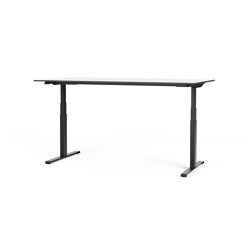
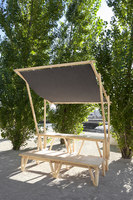
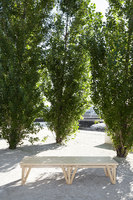
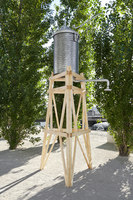
For his small children’s desk the Belgian designer Quentin de Coster found inspiration in the scetches of dogs and tables he asked some five year olds to draw. The beautiful figurative yet simple design results from a mixture of these drawings.
(766)
(434)
(214)
(158)
(96)
(1541)
(105)
For his small children’s desk the Belgian designer Quentin de Coster found inspiration in the scetches of dogs and tables he asked some five year olds to draw. The beautiful figurative yet simple design results from a mixture of these drawings.
This year, young designers excelled themselves with the high quality of work on show. In the following video, we present our favourites from the [d3] contest.
'Unit' by Nosigner for 'AWA'
The Japanese Designer Nosigner started a new collaboration with the Tokushima Wood & Bamboo Industrial Cooperative Society Confederation and founded the new wood furniture brand ‘AWA’. Their new collection will be presented at this year’s Designtide in Tokyo.

'Unit' by Nosigner
“Tokushima was once called the country of Awa, the tradition of wood furniture was initiated by ship builders. Thus, AWA decided to go back to its Tokushima woodworking roots to form this new and yet traditional project to bring Japan’s wood working culture into the future.”

'Cartesia' by Nosigner

'Cartesia' by Nosigner

'Cartesia' by Nosigner
more Nosigner products @ Architonic
The whole collection of Dare Studio
At this year’s 100%Design in London a new promising manufacturer will launch his first collection: Dare Studio. The company was founded by Sean Dare, who worked as designer for more than ten years producing many commercially successful designs for leading retailers and manufacturers. The pieces he designed for Dare Studio are made in relatively small quantities and show a high standard of craftmanship.

Solid wood chair by Dare Studio
The Katakana Range comprises of a writing / laptop desk, an occasional chair and a low lounge chair. All made in solid walnut with leather detailing. The Writing / laptop desk features a central storage / cable management area to hide away all of those unsightly power packs and cables.
'Katakana' desk by Dare Studio
All the pieces are locally produced.

Fujiya Floor and Desk lamps by Dare Studio

In line with strict environmental policies of both companies, materials and manufacturing processes have been carefully selected both for their minimal impact on the environment and for their cost.
‘Muji manufactured by Thonet’ is a collection of simplified, stylised Thonet designs made of bentwood and tubular steel, manufactured to Thonet’s customary high standards at their Frankenberg HQ and available exclusively at Muji stores in Japan, Germany, Paris and the UK.

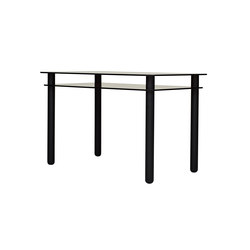
The tubular steel series was created by Konstantin Grcic and comprises a chair and desk in three sizes. Three polypropylene drawers can be suspended beneath the MDF table top.
By uniting the design heritage, skilled craftsmanship and manufacturing capabilities of Thonet with the streamlined design aesthetic of Muji, not to mention its youthful, design savvy audience, beautiful designs gain new relevance for today’s modern, urban lifestyle. The beech bentwood collection takes Thonet’s most famous bentwood chair, No. 14, as its inspiration. (This design – now called the 214 chair – still features in the Thonet collection, this year celebrating its 150th birthday.)
more products from Konstantin Grcic @ Architonic

The beech, bent wood collection was designed by Milan-based, British creative director of Thonet James Irvine and features a single panel supporting the back of the chair, which aligns with the accompanying table top.
more products from James Irvine @ Architonic
There are plans to enhance the collection in the near future. Both Muji and Thonet have collaborated with international designers in the past. What is ground breaking for both companies is their decision to work together with named designers to reinterpret important design masterpieces from Thonet’s historic back catalogue, making them accessible to a younger, broader, ‘Muji’ marketplace.
more products from Thonet @ Architonic

Dave N. Port by Rolf Carl Nimmrichter for aer 2009
Rolf Carl Nimmrichter is an independent Swiss architect and designer since 1999 and engaged with Corporate Design and Brand Development. The focus of his work is Corporate Architecture which means architecture as an expression of corporate values and instrumental in the identity and marketing of companies. 2009 he established the label aer for contemporary classic design.

The davenport is back
Dave N. Port by aer 2009 is a small, elegant writing and computer desk for the bedroom or the study. It is made entirely of european walnut and soft leather covering. A slidable worktop hides a shelf for keyboard, laptop and other writing utensils. Multi-plugs and power adapters are hidden in an easy accessible box. cables find their way through the table legs. The davenport is back.
'Todd' by Llot Llov
Llot Llov are four young designers based in Berlin. With their latest range of prototypes they question the systems of arrangement and order which ordinary furniture often imposes.
The stool Todd for example leaves place for the everyday laundry. What’s normally not comfortable to sit on is in this case necessary. The laundry is the cushion of the seat.

'Clark' by Llot Llov
“The desk is being used as an entire workspace and at times it is even used in more unusual ways. Depending on what activity is going on at the time things which sit or lie around are being moved to the side to make room for what is currently needed. It is not unusual to find stacks of paper, box files and stationary items building up along the sides of desks. It gets to the point depending on level of busyness and personal tidiness where all the accumulated things start to hinder our activities. But quite often the supposed chaos has its own hidden order. Stacks are being ordered according to themes or urgency but even sorting through stacks slows us down and takes up valubale time.
The desk ‘Clark’ provides temporary storage which is not about filing or sorting but simply stacking. Everything stays within reach and does not disappear In drawers or cupboards.”

'Bill' by Llot Llov
‘The shelve ‘Bill’ picks up on the common way of using a shelve by randomly placing objects on It. The stackable elements form a shelve which provides containers rather than shelving space. The open area towards the front makes it easy to reach inside. Therefore the randomly placed and unordered content Is accessible but less visible. The most used things get stored towards the front the back allows you to keep what you hardly use but can’ quite let go yet.’