Posts tagged as 'Architecture'

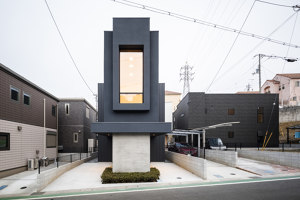
Pyramide in Saijo, Hiroshima by Suppose Design Office

Pyramide in Saijo, Hiroshima by Suppose Design Office

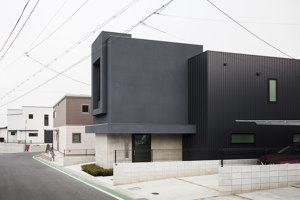
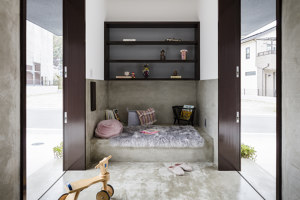
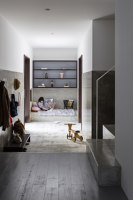
In the nine year existence of Japanese Suppose Design Office they have built more than 50 works of architecture, almost all single-family homes. In Saijo, a town known for it sake, a jet black pyramid unexpectedly stands out; when first seen it seems as if it’s a house from the future. On the contrast, it’s actually inspired by the earliest house in Japanese architecture; the pit dwelling or the “tateana jukyo”. Constructed during the Yayoi era (200 B.C. – 250 A.D.), pit dwellings were built by digging a circular pit (or rectangular one with rounded edges) fifty or sixty centimeters deep and five to seven meters in diameter, then covering it with a steep thatched roof.

Inspired by the earliest house in Japanese architecture

Inspired by the earliest house in Japanese architecture

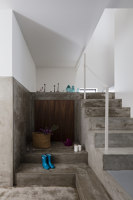
According to Makoto Tanijiri, chief architect of Suppose Design Office, the clients, a young couple and their three children wanted a unique house, in which the open public part would preserve privacy. The site which was formerly an open field was excavated and the house was sunk a meter into the ground. The soil from the excavations was used to create a protective barrier around the perimeter of the site, and acted as the organic base of the house. The barrier formed is both visual and physical and was planted to create a lush landscape.

The soil from the excavations was used to create a protective barrier around the perimeter of the site

The soil from the excavations was used to create a protective barrier around the perimeter of the site

to Suppose Design Office


seen @ the junction

Thu 16.7.

Dancing Living House by Junichi Sampei

Posted by NoéMie Schwaller on 16.07.2009 - Tagged as: , , ,

Dancing Living House by Junichi Sampei

Dancing Living House by Junichi Sampei

Japanese architect Junichi Sampei of A.L.X. (Architect Label Xain) came up with a new house that can combine the needs of a home with those of a dancing studio.

Yokohama, Japan

Yokohama, Japan

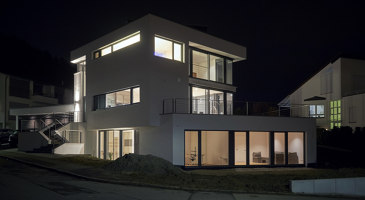
Located in Yokohama and designed as a single-family residence combined with a dance studio, this three-story reinforced concrete building is private and open to the sky, and best of all it has plenty of parking, which comes at a premium in Japan. The concrete building has a big glass corner that invites sunlight in and features white styled futuristic exterior to enhance the dynamic mood and to bring in fresh energies all day long.

The concrete building has a big glass corner that invites sunlight in.

The concrete building has a big glass corner that invites sunlight in.

Construction Area: 634 square feet

Total Floor Area: 1,224 square feet/ 1st Fl – 185 sf., 2nd Fl – 609 sf., 3rd Fl – 430 sf.


to Junichi Sampei / A.L.X.
 

seen @ waht we do is secret

Automotive Museum by Future Systems, Jan Kaplický

Maserati Museum by Future Systems, Jan Kaplický 2009

Jan Kaplický, who died earlier this year, was the Czech architect responsible for some of the most remarkable buildings that Britain has ever seen. Lord’s cricket ground holds the press box he built with his former partner, Amanda Levete – it was their first major project and won the Stirling Prize.

Automotiv Museum

Maserati Automotive Museum, Modena, Italy

Kaplický also designed the Selfridges department store in Birmingham, 2003 and yet even more remarkable are the buildings that Kaplický designed, which the world will never see – to say nothing of his stream of ideas for solar powered vehicles, electric cars, jewellery, bikinis and double-decker buses.

Media Center at Lord's

Media Center at Lord's

Now the Design Museum London pays tribute to this astonishing architect showing a wide range of his architectural archetypes of buildings never to be established.


read article @ Architonic

Best Tall Building 2009 by Steven Holl

Posted by NoéMie Schwaller on 13.07.2009 - Tagged as: , , ,

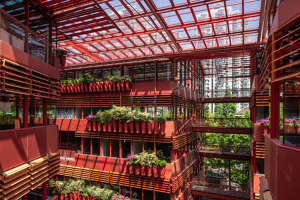
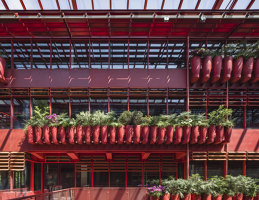
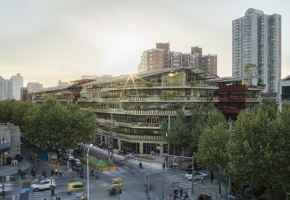
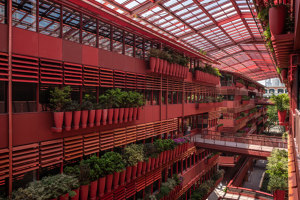
A mixed-use complex of eight linked towers in Beijing, China. Photos: Steven Holl Architects

A mixed-use complex of eight linked towers in Beijing, China. Photos: Steven Holl Architects

The 220,000 square-meter Linked Hybrid complex in Beijing, aims to counter the current urban developments in China by creating a twenty-first century porous urban space, inviting and open to the public from every side. A filmic urban experience of space; around, over and through multifaceted spatial layers, as well as the many passages through the project, make the Linked Hybrid an “open city within a city”. The project promotes interactive relations and encourages encounters in the public spaces that vary from commercial, residential, and educational to recreational; a three-dimensional public urban space.

A series of multi-functional “skybridges” connect the eight residential towers and the hotel tower.

A series of multi-functional “skybridges” connect the eight residential towers and the hotel tower.

The ground level offers a number of open passages for all people (residents and visitors) to walk through. These passages include “micro-urbanisms” of small scale shops which also activate the urban space surrounding the large central reflecting pond. On the intermediate level of the lower buildings, public roof gardens offer tranquil green spaces, and at the top of the eight residential towers private roof gardens are connected to the penthouses. All public functions on the ground level, – including a restaurant, hotel, Montessori school, kindergarten, and cinema – have connections with the green spaces surrounding and penetrating the project.

The project was named Best Tall Building 2009 in the Asia and Australia category by the Council on Tall Buildings and Urban Habitat

The project was named Best Tall Building 2009 in the Asia and Australia category by the Council on Tall Buildings and Urban Habitat

Elevators displace like a “jump cut” to another series of passages on higher levels. From the 18th floor a multi-functional series of skybridges with a swimming pool, a fitness room, a café, a gallery, etcetera connects the eight residential towers and the hotel tower, and offers views over the unfolding city.


continue article @ Architonic

Thu 2.7.

Conrad Hotel by MAD

Posted by NoéMie Schwaller on 02.07.2009 - Tagged as: , , ,

In Progress: Conrad Hotel by MAD

In Progress: Conrad Hotel by MAD

The CBD of Beijing was built according to the west standard set up around the industrial revolution of the early 20th century, when high-rise building was the symbol of the capitalism. But far from the ambition of more than one hundred year ago, when people tried to challenge themselves with modern technology and future dreams, the contemporary CBD buildings are the concrete machines, copy of the copy in mass production. They are meaningless, crowded and soulless.

fassade structure

façade structure

Situated among those buildings, Conrad hotel is the outcome of the slow-design. The façade element, which looks like the nervous tissue, is planted into a simple cubic. It is the toxin that destroys and transforms the surface into an organic envelop. The whole building is turned into a melting box, a starting point for the urban grid to change from the solid efficiency into the liquid idea. The standard product of the production line is therefore replaced by the digital craft of difference.

works representing the worship of nature

works representing the worship of nature

During the architecture evolution, people of different historical time tried to create organic buildings by their hand-made crafts. Their works are the representation of the worship of nature, the courage to break the heaviness of building and the passion of life. It is the spirit of sublime that became the culture icon of the era and the city. Conrad hotel is the design that appreciates the slowness in the fast urban development in China. The product of architecture is like the growing process of urban dwellers in the city, it is the evolution of energy and identity. The new urban efficiency is the difference precisely controlled and produced by the high-tech modern industry, and it creates the new possibility for people living in the city to discover their own new experience.

seen @ Archdaily

Casa Colombo by Carlo Colombo

Casa Colombo by Carlo Colombo

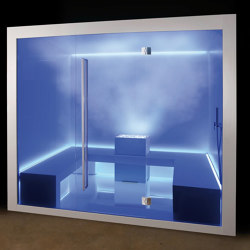
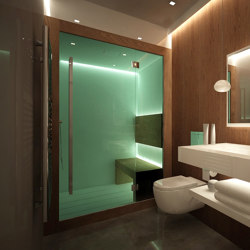
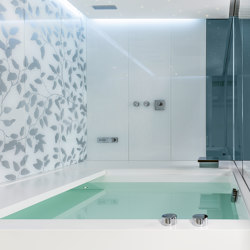
The Milanese designer Carlo Colombo will present the project “Casa Colombo” at the upcoming edition of Abitare il Tempo in Verona on the 17th – 21st September 2009. The project is based on the concept that a house has to express the thought of the architect and his lifestyle. That way Colombo defines two separate unities assigned to the two souls of a house: the day unity and the night unity. The two unities are separated by water, the natural element to which the architect has a strong connection, that separates but at the same time joints the two zones. The house rises from a square form that creates a hidden mesh on which are arranged the partition walls and pillars, therefore the space appears very open.

Interieur of Casa Colombo

Interieur of Casa Colombo

It is the choice of the interior that divides the spaces and creates a cosy and informal atmosphere, typical of modern living. The night zone has as its centre the large volume of the shower cubicle, the moment of regeneration, fundamental in the fast-paced modern life. The stone of the sink rises from the ground in an harmonic arrangement. The entire house doesn’t have a filter between the inside and outside to unite mankind and nature. It is nearly a primeval house concept, a shelter from the rain, however considering the main expectation of modern mankind.

"A house has to express the thought of the architect and his lifestyle."

"A house has to express the thought of the architect and his lifestyle."

The project will be realized together with Stratex, the leading company in the sector of plywood with which the architect Carlo Colombo already collaborated for the production of a series of projects of ecological prefabricated houses and with the collaboration of important furniture companies to guarantee solutions of quality and design made in Italy.


more Carlo Colombo products @ Architonic

Tue 14.4.

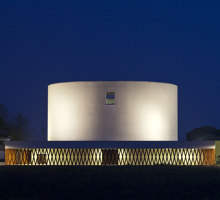
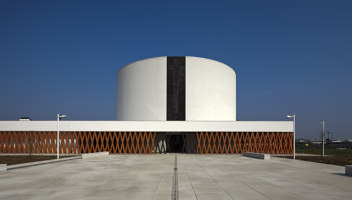
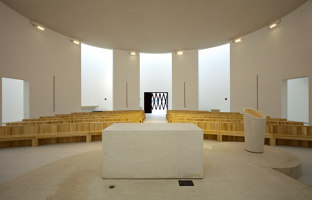
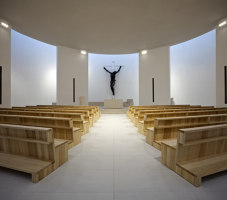
Peres Peace House, Jaffa/Israel by Fuksas Architects

Posted by Nora Schmidt on 14.04.2009 - Tagged as: , , ,

Peres Peace House by Massimiliano and Doriana Fuksas

Peres Peace House by Massimiliano and Doriana Fuksas, all Photos by Moreno Maggi

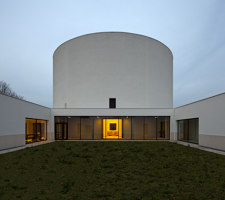
Building the peace house was an initiative originally launched by the late Palestinian leader Jassir Arafat and Israeli president Shimon Peres. At the present day and in particular after the latest manifestations of violence from both camps, the opening of the building, which still bears the name of one of its founders – ‘Peres Peace House’ – comes with a bitter after-taste.

(more…)

The Independent Source for
Products, Materials and Concepts Architonic | architecture and design
Creative materials consultants to the architecture and creative industries. Creative materials consultants to the architecture and creative industries.
Fascinating World of Design for
Modern Kids Kidsmodern - Fascinating World of Design for Modern Kids
Broadcasting Architecture Worldwide Broadcasting Architecture Worldwide
International Architecture News International Architecture News
Online Design Magazine Online Design Magazine