Architecture Inspirations Materials

Fri 3.7.

ComplexCity

Posted by NoéMie Schwaller - Tagged as: , ,

The ComplexCity collection will be introducing 10 famous metropolis.

The ComplexCity collection will be introducing 10 famous cities.

ComplexCity is an exploration to find a concealed aesthetic by using the pattern formed by the city’s roads, which have been growing and evolving randomly through time, thus composing the complex configuration we experience today.The project started in Seoul, Korea, where designer Lee Jang Sub was born and has grown up. Now it is expanding to other cities all over the world. Lee Jang Sub now lives in Barcelona, Spain, and explains: “I perceive the city’s patterns as living creatures that I recompose to form an urban image.”

Displayed above are examples for the cities of Rome and Paris

Displayed above are examples for the cities of Rome and Paris

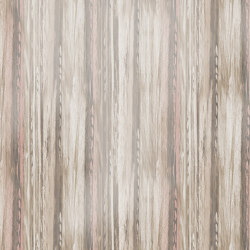
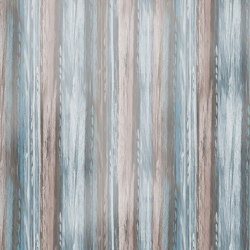
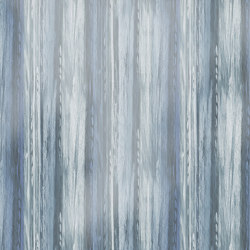
The ComplexCity design concept is screen-printed on different materials, such as wood, textil, or paper, each giving the design a different feel. For the final product, the screen-printing effects of the design are implemented on one of the materials listed above. 


to ComplexCity

Architecture Products

Fri 3.7.

29GPS

Posted by NoéMie Schwaller - Tagged as: , ,

29GPS_Architecture

29GPS_Architecture

29GPS_Architecture is an application that can be downloaded from Apple’s iTunes App Store for free. 29GPS_Architecture is GPS enabled and showcases a new find daily from great architectural works from around the world. Each story includes several full screen photographs and a short summary of the project. Each editorial feature story includes a GPS embedded map function to provide location and directions and a 29GPS_Radar function that provides a color coded (red, yellow, or green) visual indicator of your proximity to the featured story. Select stories also include, audio and/or video segments. 29GPS applications can be found through.


to 29GPS

Way-finding-system in the Eureka Tower Carpark, Melbourne

Way-finding-system in the Eureka Tower Carpark, Melbourne

With miles of concrete and cinder block as their palette, the Melbourne-based emerystudio design team decided to have some fun with graphics for the Eureka Tower parking garage in Melbourne.

The design team painted key words / directions directly on the garage walls and floors.
The design team painted key words / directions directly on the garage walls and floors.
Inspired by the work of Swiss artist Felice Varini—whose perspective-defying installations look a lot like giant vector art superimposed on buildings or interior architectural spaces—the team designed colorful forms that are both two- and three-dimensional.

Inspired by the work of Swiss artist Felice Varini.

Inspired by the work of Swiss artist Felice Varini.

Using a projector technique for positioning, the design team painted key words/directions directly on the garage walls and floors Varini style. From different viewpoints, the supersized letterforms can be perceived as either abstract distortions or directional information. Using an anamorphic approach wherein the images seem distorted until the viewer’s vantage point is perfect, the words ‘In,’ ‘Out,’ ‘Up,’ and ‘Down’ snap into alignment to convey information at key decision-making points along the way. For drivers, the result is more engaging than the typical boring journey through a colorless cement cavern.’ The project won several international design awards.


to emerystudio

Inspirations Products

Thu 2.7.

Prototyp

Posted by NoéMie Schwaller - Tagged as: , , , , ,

Addictlove by Tom Burr

Addictlove by Tom Burr

A research project at the Institute for Theory at Zurich’s University of the Arts looks at current furniture works involving design and art.


Design and art

Ever since the modern concept of the autonomy of art created the necessity of dividing the two areas more than 100 years ago, designers and artists have again and again adopted each other’s design and production concepts. Today this practice can increasingly be observed in the structure of exhibitions, methods of production and sales channels.

do hit by Marjin van der Poll, 1999

do hit by Marjin van der Poll, 1999

However, with the existing differences in the ways these two disciplines see themselves and the debates taking place in the fields of art and design it does not appear useful simply to call for these borders to be broken down. On the contrary, in this project the all-inclusive research approach is applied to the examination of a modified concept of function within design, art theory and sociology, as well as their current relationship with the things that are created. 


continue Article @ Architonic

Wardrobe Twinni by M&G

Wardrobe Twinni by M&G

M&G from Austria recently launched the wardrobe Twinni. The cheerful design was created by Heinz Glatzl and Joachim Mayr, founders of M&G Interiors. The unadorned framework implements the shape, but Twinni is more than that: it is a seating bench with storage capacity made out of matt-lacquered MDF (medium density fiberboard). We will surely soon see more innovative ideas for wardrobes from M&G.

Design by Heinz Glatzl and Joachim Mayr

Design by Heinz Glatzl and Joachim Mayr


more products from M&G @ Architonic

Architecture

Thu 2.7.

Conrad Hotel by MAD

Posted by NoéMie Schwaller - Tagged as: , , ,

In Progress: Conrad Hotel by MAD

In Progress: Conrad Hotel by MAD

The CBD of Beijing was built according to the west standard set up around the industrial revolution of the early 20th century, when high-rise building was the symbol of the capitalism. But far from the ambition of more than one hundred year ago, when people tried to challenge themselves with modern technology and future dreams, the contemporary CBD buildings are the concrete machines, copy of the copy in mass production. They are meaningless, crowded and soulless.

fassade structure

façade structure

Situated among those buildings, Conrad hotel is the outcome of the slow-design. The façade element, which looks like the nervous tissue, is planted into a simple cubic. It is the toxin that destroys and transforms the surface into an organic envelop. The whole building is turned into a melting box, a starting point for the urban grid to change from the solid efficiency into the liquid idea. The standard product of the production line is therefore replaced by the digital craft of difference.

works representing the worship of nature

works representing the worship of nature

During the architecture evolution, people of different historical time tried to create organic buildings by their hand-made crafts. Their works are the representation of the worship of nature, the courage to break the heaviness of building and the passion of life. It is the spirit of sublime that became the culture icon of the era and the city. Conrad hotel is the design that appreciates the slowness in the fast urban development in China. The product of architecture is like the growing process of urban dwellers in the city, it is the evolution of energy and identity. The new urban efficiency is the difference precisely controlled and produced by the high-tech modern industry, and it creates the new possibility for people living in the city to discover their own new experience.


seen @ Archdaily

Fantastic Norway as part of the DMY Festival 09

Fantastic Norway as part of the DMY Festival 09

An event created by Fantastic Norway as part of the DMY International Design Festival 09 in Germany / Berlin. In the project members of Fantastic Norway were wearing models of high-rise towers while walking, cycling and dancing around the city. They dressed up as their latest building and went sight seeing around Berlin.
 

”The walking houses are man-sized models of our latest architectural project: a tourist destination located on the northern west coast of Norway. As our project depend on the idea of travelling, we decided it was only fair that the houses got to do some travelling too!”

They dressed up as their latest building and went sight seeing around Berlin.

They dressed up as their latest building and went sight seeing around Berlin.

The project consists of a group of narrow high-rise modules welcoming the guests of the Norwegian west coast. The systematic and flexible module-system allows the outdoor spaces, the miniature high-rise modules and the interiors to be designed in collaboration with the future inhabitants and selected artists. Interacting with the locals of Berlin, the event emphasizes the project’s social and local ambitions.

Interacting with the locals of Berlin.

Interacting with the locals of Berlin.

Architectural team: Håkon Matre Aasarød, Erlend Blakstad Haffner, Magnus Ohren, Tomos Osmond, Anne Busemann, Mathias Steinbru, Anette Flygansvær, Ingeborg Cappelen Lindheim, Renata Barros and Håvard Arnhoff.


to Fantastic Norway


more about Fantastic Norway @ Architonic


more about the DMY Festival 2009 @ Architonic

The LEGO Solomon R. Guggenheim Museum NY

The LEGO Solomon R. Guggenheim Museum NY

The Frank Lloyd Wright Foundation announced that The LEGO Group is now the exclusive licensed manufacturer of Frank Lloyd Wright Collection® LEGO Architecture sets. The line currently consists of six buildings – now including two of Frank Lloyd Wright’s most famous and recognizable buildings, the ‘Solomon R. Guggenheim Museum NY’ and ‘Fallingwater’.
With models developed in collaboration with architects, LEGO Architecture works to inspire future architects, engineers and designers as well as architecture fans around the world with the LEGO brick as a medium. Builders of all ages can now collect and construct their favorite worldwide architectural sites through these artistic replicas.
Both exclusive Frank Lloyd Wright LEGO Architecture sets contain booklets that feature traditional building instructions along with exclusive archival historical material and photographs of each iconic building. 

The Original Solomon R. Guggenheim Museum NY

The Original Solomon R. Guggenheim Museum NY

“By organic architecture, I mean an architecture that develops from within outward in harmony with the conditions of its being, as distinguished from one that is applied from without.” - Frank Lloyd Wright Collected Writings Volume 1, p.127

The LEGO Fallingwater

The LEGO Fallingwater

Doug Volker of the Frank Lloyd Wright Foundation
According to Director of Licensing and Product Development, Doug Volker, “The LEGO product was one that the Frank Lloyd Wright Foundation had considered pursuing for several years. It was the vision, passion and creative desire of Adam Reed Tucker to capture the essence of Mr. Wright’s most famous buildings using the medium of the LEGO brick that brought this partnership into being. The LEGO Group is known for its creative approach to brick models and now, with its Architecture Series, it will reach even further, to individuals of all ages.” 

The original Fallingwater

The original Fallingwater

more Frank Loyd Wright products @ Architonic


to Frank Lloyd Wright Foundation


to LEGO

Interiors Products

Wed 1.7.

Mtoo: new functions & new emotions

Posted by NoéMie Schwaller - Tagged as: , ,

The innovations of Mtoo act in response to the new functions and emotions.

The innovations of Mtoo act in response to the new functions and emotions. Photo: Stijn Bollaer

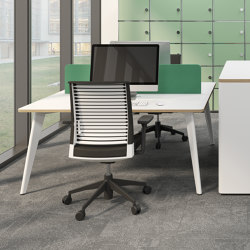
The Belgian manufacturer Bulo redesigned the Mtoo desk. The 1m2 desk has been reconceived whilst retaining its basic concept: a drawer unit, a footrest and a floating worktop. The innovations of Mtoo act in response to the new functions and emotions, expected from the 21st century desk.

New Mtoo desk by Bulo

New Mtoo desk by Bulo. Photo: Stijn Bollaer

Mtoo is height adjustable and the various accessories facilitate filing and sorting. An optimum sense of well-being is created by a footrest / carpet allowing users to kick off their shoes and work on bare feet. Love your office!
 

more Bulo products @ Architonic

The New Town Hall in Tallinn by BIG

The New Town Hall in Tallinn by BIG

The Danish Bjarke Ingels Group (BIG), a Copenhagen based group of 85 architects, designers, builders and thinkers, has been awarded first place in an international design competition for the new City Hall near the Linnahall building on the harbour of the Estonian Tallinn. The new design presents a cluster of volumes, housing different administrative offices. The volumes are elevated creating a new public place under the Town Hall. Like most projects by BIG the architecture is derived by rationalised organisational principle, this time to maximize natural lighting by breaking up the building function into small blocks - this allows for courtyards to be created at various levels as well open up the ground floor as an extension of the city.

The volumes are elevated creating a new public place under the Town Hall.

The volumes are elevated creating a new public place under the Town Hall.

Inside, the city council greeting hall is accessed via the grand stair or elevators directly from the market place, or from the city offices around it. Above the greeting hall, the city council is located in a generous space illuminated though a large window facing the city. The ceiling of the tower is tiled with a reflective surface - creating a kind of ‘periscope’ effect. The circular formation of council members will thus be reflected in the tilted ceiling. From a distance the silhouette of the town hall tower enters the family of Tallinn’s historical spires including those of the Niguliste Museum-Concert Hall, Toomkirik, Kaarli Kirik, Pühavaimu Kirik, St. Olav Church and the current Town Hall.

The ceiling of the tower is tiled with a reflective surface - creating a kind of ‘periscope’ effect.

The ceiling of the tower is tiled with a reflective surface - creating a kind of ‘periscope’ effect.

Bjarke Ingels, BIG, Partner-in-Charge:

“There is a saying that success has many fathers. That is especially true when designing such a crucial public building and public space as a town hall. The design needs to be shaped by input from neighbours  and users, citizens and politicians. Paradoxically we architects often find ourselves isolated from this crucial dialogue at the moment of conception, due to the anonymity of the architectural competition. Since this was a 2 stage competition, we already had our first feedback from the jury – causing us to dramatically rearrange our design to fit the citizens’ needs. As a result we have envisioned a very elastic structure – capable of adapting to unexpected demands. We see it as the first conversation in a design dialogue we look forward to continue.”


to the Bjarke Ingels Group


The Independent Source for
Products, Materials and Concepts Architonic - Products in architecture and design
Fascinating World of Design for
Modern Kids Kidsmodern - Fascinating World of Design for Modern Kids
Broadcasting Architecture Worldwide Broadcasting Architecture Worldwide
International Architecture News International Architecture News
Online Design Magazine Online Design Magazine